Family Background & Connection to Amos Jerome Snell


The Snell Family Connection
Understanding the Legacy
Learning that I am the great-great-great granddaughter of Amos Jerome Snell — a titan of the Gilded Age, a man woven into Chicago’s early economic fabric — complicated everything I thought I understood about legacy. His story is not simple. Amos was not merely a pioneer or a self-made millionaire. He was controversial. Admired by many, resented by just as many. A man who lifted some people up while charging others tolls they could barely afford. A man whose generosity and toughness lived side by side.
So when I discovered that this man was my ancestor, I had to sit with it. I had to sit with all of it — the brilliance, the ambition, the controversy, the power, the privilege, the enemies, the violence that ended his life.
For a long time, I didn’t know enough about the white side of my family to understand what I carried from them. I grew up as a Black woman raised almost entirely outside of that history. And then suddenly, through DNA results, research, and a trail of documents leading back to Chicago in the 1800s, I found myself staring into the life of a man who built streets I might have walked on, whose wealth shaped neighborhoods, whose business decisions shaped the lives of everyday people — for better and sometimes for worse.
That’s when legacy stopped being an abstract word and became something real, something I could feel.
Because Amos Snell was not just wealthy — he was a power figure. And people with power in that era "created value" but also created tension. His toll road empire frustrated farmers and merchants who had no choice but to pay his fees. His monopoly made him rich and made others furious. He was respected as the “poor man’s friend,” yet also resented as a gatekeeper standing between working-class people and their livelihoods. His businesses built Chicago — but they also created conflict.
So how do I, a Black woman born in 1964 at Fitzsimons Army Medical Center in Aurora, Colorado — the child of an interracial marriage that caused a family rift — make sense of being descended from a man like that? A man who lived in a time when the state of Illinois tried to block Black people from entering at all? A man whose success depended on systems that excluded people who looked like my father?
These are the questions that surface when legacy meets reality.
And yet, when I look at my life, I cannot deny that something of Amos’s nature runs through me. Not his privilege, not his white-male-1800s access to opportunity — but his drive. His instinct to build from nothing. His refusal to be ordinary. The way he saw possibilities where others saw limits.
I didn’t inherit his millions or his marble-front houses. But I did build my own company. I carved out space in the media world. I became a storyteller, a creator, a seeker of truth — just as he was a creator of roads, buildings, and opportunity. My success looks different than his, but maybe that’s because each generation is called to rise in its own way.
Then there is the darker part of the inheritance — the mystery. The unfinished business. The haunting question of who killed him, and why. Amos died violently, shot in his own mansion, a crime that remains unsolved 136 years later. That kind of ending leaves a shadow, a piece of the story suspended in air. And maybe that explains why I feel such urgency to dig, to uncover, to understand the “why” behind the things people tried to bury. The reporter in me, the investigator in me, the woman who has always been drawn to truth — maybe that, too, is inherited.
But the most powerful part of this legacy is what it forced me to confront:
That I come from a complicated line — a line of ambition, controversy, power, resilience, and reinvention.
And that I have the right to claim every part of it.
My existence brings those worlds together in a way my ancestors could have never imagined. The Black grandmother who told me the story of how my mother’s mother called the police claiming my father had kidnapped her daughter. The white relatives who didn’t know I existed. The ancestor who built toll roads that farmers cursed, and the child he would never meet — me — piecing together his legacy from the fragments left behind.
What does it mean that I am his descendant?
It means that legacy is not always neat.
It is not always comfortable.
It is not always flattering.
But it is always powerful.
And I believe I am meant to tell this story — not because Amos was perfect, but because he was human. Because his brilliance and flaws shaped generations, including mine. And because by understanding him, I understand more about myself:
My grit.
My purpose.
My ability to build something out of nothing.
My commitment to truth, even when it is uncomfortable.
I am not the heir to his millions, but I am the heir to his complexity.
I am the living chapter that he never saw coming.
And now, I am the one completing the story.
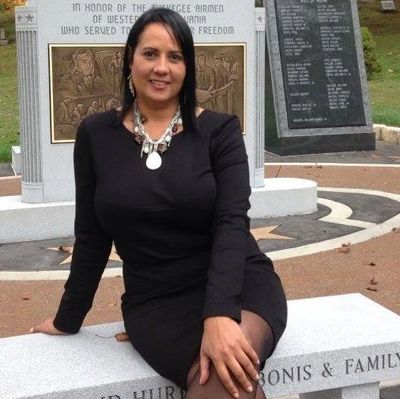
Robin Beckham Direct Line to Amos Jerome Snell

Here's how I am related to Amos Jerome Snell
Through Ancestry.com I was able to link my family tree to Amos Jerome Snell, I also was able to confirm through DNA some of his relatives. As a direct descendent, my mother, Tracee Lynn McCrea, is the daughter of William Gordon McCrea. William Gordon McCrea is the son of William Snell McCrea. William Snell McCrea is the son of Alice Snell McCrea. Alice is the daughter of Amos Jerome Snell, my 3rd Great Grandfather.
Robin Beckham profile
My Journey
I was born on January 18, 1964, at Fitzsimons Army Medical Center in Aurora, Colorado — a child whose very existence stirred up both love and conflict. My father, Reginald, a Black man, had married my mother, Tracee McCrea, a white woman, at a time when their union was far from accepted. Their relationship sent shockwaves through both families. They eloped to Minneapolis, Minnesota on February 24, 1963, barely twenty years old, clinging to love in a world intent on tearing them apart.
My maternal grandmother, Shirley, was so opposed to the marriage that she called the police and claimed my father had kidnapped my mother. My Black grandmother, Cecilia Jones, told me this story many times — each retelling thick with disbelief at just how far Shirley had gone to stop them.
Because of those ruptures, I grew up estranged from my mother. The white side of my family lived behind a curtain I couldn’t lift. I became a young girl full of questions, longing to know where I fit and who I belonged to. It was that yearning — that ache for history and identity — that would one day lead me straight into the extraordinary discovery of my connection to Amos Jerome Snell, my third great-grandfather, a man whose name carried both power and controversy through Chicago’s Gilded Age.
Along my search, I found relatives who had no idea I existed. My mother had kept me hidden. The shock rippled both ways — their astonishment that Tracee had a child, and my realization that an entire lineage had unfolded without me.
Yet even as a child, I somehow felt tethered to a past I had never been told about. I dreamed of being a cowgirl living on a sprawling ranch — the dust, the open fields, the rhythm of horses beneath me. I didn’t know then that my maternal ancestors were prosperous ranchers, owners of McCrea’s Ranch in Island Park, Idaho, and before that, Trude Ranches in the Shotgun Valley. There I was, a little Black girl in urban Denver, galloping across imagined plains, unknowingly channeling the lives of my ancestors. It didn’t feel like pretend; it felt like remembering.
My professional life led me into the power of storytelling. For more than twenty years, I worked in television — anchoring, reporting, writing, producing — shaping narratives and elevating voices. In 1993, I moved to Pittsburgh to serve as Director of Public Affairs for WPXI-TV (NBC), a role I held for eleven years before stepping into corporate public relations at U.S. Steel.
Education became another thread of my identity. I earned a Bachelor of Arts in Broadcast Journalism from the University of Washington, then a Master’s Degree in Public Affairs from the University of Illinois. While living in Illinois, I felt an unexplainable pull toward Chicago — a sensation I carried long before I knew why. The city felt familiar, almost ancestral.
Later, I learned that it was: Chicago was where Amos Snell built his empire.
And what an empire it was.
Arriving in Chicago in the 1840s with just $18.50, Amos Snell rose from impoverished beginnings to extraordinary wealth. By the time of his death, his fortune reached the modern equivalent of more than $75 million. He owned more than 400 buildings across Illinois and Iowa and constructed one of Chicago’s most admired mansions at Washington Boulevard and Ada Street.
But his legacy is complicated.
To some, he was a benefactor:
“Mr. Snell was ever the poor man’s friend. When renters on his farms had poor crops or fell behind, he carried them over, saying, ‘It will be better next year.’”
To others, he was a monopolist whose toll roads imposed steep, unregulated fees — a man who controlled access to the city and profited from that control. His business ventures were bold, sometimes ruthless, and his life ended in a still-unsolved murder that shocked Chicago.
As I sifted through the archives, I found myself oscillating between awe and unease.
I kept asking:
- Did he rise because he was brilliant?
- Or because he was a white man in a world built to reward white ambition?
- Did he help people — or exploit them?
- And what does it mean for me, a Black woman, to inherit the legacy of a man whose world was never built for someone like me?
These questions don’t scare me. They clarify me.
Because while I may not have inherited Amos Snell’s wealth, I inherited his drive.
His grit.
His unrelenting push to build something that lasts.
In 2009, I started Beckham Media and launched PittsburghUrbanMedia.com — a platform dedicated to telling the stories of the African American community throughout Western Pennsylvania. I didn’t realize it at the time, but I was continuing the legacy of the builders in my bloodline, the risk-takers, the entrepreneurs. I was carving out my own place in a lineage I was only beginning to understand.
And now, after decades of telling other people’s stories, I know it’s time to tell the one story I was born to uncover — the story hidden in the shadows of two families, the story that connects racism, secrecy, resilience, and the sprawling legacy of a Gilded Age titan:
My own.
With a journalist’s instinct and a granddaughter’s determination, I am stepping into this history not just to honor it, but to interrogate it, redefine it, and finally — fully — claim it.
Because in the end, I keep coming back to one question:
What’s legacy got to do with it?
For me, the answer is: Everything.

Robin Beckham , in Denver Colorado.
Mom & I visit in Seattle, Washington

Robin Beckham
Robin Beckham, kindergarten moments.

With Tracee McCrea, my mother,
This photo with Tracee McCrea, is when we came together in Seattle, Washington back in 1987.
Cecilia Jones, My paternal grandma
Cecilia Jones, My paternal grandma
This photo with my paternal grandmother Cecilia Jones. My grandma Cecilia still had much love and respect for my mom, she greeted her with love and care.
My Maternal side of the family

Reginald Beckham, Dad
Shirley McIntyre /McCrea - Grandmother
Trace McCrea, Price-Mom
My dad, Reginald Beckham, his parents, Cecilia Lovette Jones, and his father Peter Boaston. Reginald married Tracee McCrea in February, 1963.
Trace McCrea, Price-Mom
Shirley McIntyre /McCrea - Grandmother
Trace McCrea, Price-Mom
My mom, Tracce Lynn McCrea, born in Spokane Washington in 1942. Her mother, was Shirley Mccrea and her father, William Gordon McCrea.
Shirley McIntyre /McCrea - Grandmother
Shirley McIntyre /McCrea - Grandmother
Shirley McIntyre /McCrea - Grandmother
Shirley McIntyre McCrea born in Littleton Colorado, in 1910 died in 2000. She married William Gordon McCrea and they later divorce.
William Gordon McCrea-Grand Father
Shirley McIntyre /McCrea - Grandmother
Shirley McIntyre /McCrea - Grandmother
William "Gordon" McCrea, born in Saint Anthony, Fremont, Idaho in 1909, he died in 1990. Gordon's mom, was Algenia Trude McCrea and his dad, was William "Snell" Mccrea.
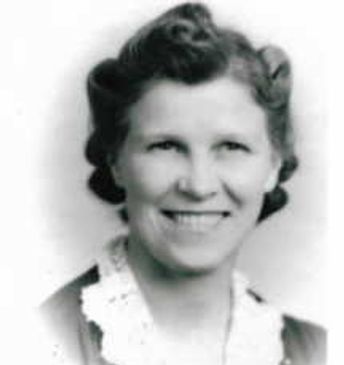
Algenia Trude McCrea-Great Grandma
William Snell McCrea-Great Grand Father
William Snell McCrea-Great Grand Father
Algenia Sally Trude McCrea, 95, longtime resident of Island Park, Idaho, operator of the McCrea Ranch, Died, September 19, 1985. Born, in 1890, at Bobcageon, Ontario Canada, she was the daughter of Charles John Down Trude and Margery Trude. She married to William Snell McCrea in June 1907, at Rea, and they managed the ranch.
William Snell McCrea-Great Grand Father
William Snell McCrea-Great Grand Father
William Snell McCrea-Great Grand Father
William "Gordon" McCrea, born in Saint Anthony, Fremont, Idaho in 1909, he died in 1990. Gordon's mom, was Algenia Trude McCrea and his dad, was William "Snell" McCrea. The shocking headlines nationwide about my great grandfather read, “Wealthy Idaho Man Ends Life.” “Snell McCrea, 35, wealthy rancher of Rea, Idaho, shot and killed himself
William "Gordon" McCrea, born in Saint Anthony, Fremont, Idaho in 1909, he died in 1990. Gordon's mom, was Algenia Trude McCrea and his dad, was William "Snell" McCrea. The shocking headlines nationwide about my great grandfather read, “Wealthy Idaho Man Ends Life.” “Snell McCrea, 35, wealthy rancher of Rea, Idaho, shot and killed himself here today following a quarrel with his father, W. S. McCrea, retired millionaire. McCrea fired three shots at his father and then turned the gun on himself. None of the shots struck the elder McCrea.”
Wiley Solon McCrea-2nd Great Grandpa
William Snell McCrea-Great Grand Father
Wiley Solon McCrea-2nd Great Grandpa
Willie was born 12 Apr 1858, in Morrison, Illinois. He was the son of Samuel Harkness McCrea and his wife, Coralin Isabel Johnson.
He was the head of the commission house of W.S. McCrea & Co. and "was a member of all the fashionable clubs in Chicago" He later served as treasurer for the Standard Oil Company.
Alice married Willey G. McCrea a
Willie was born 12 Apr 1858, in Morrison, Illinois. He was the son of Samuel Harkness McCrea and his wife, Coralin Isabel Johnson.
He was the head of the commission house of W.S. McCrea & Co. and "was a member of all the fashionable clubs in Chicago" He later served as treasurer for the Standard Oil Company.
Alice married Willey G. McCrea at Chicago, Illinois, 8 Oct 1884. They had two children:
- William Snell "Billy" McCrea, born 13 August 1885[4]
- Henriette A. McCrea, born 4 January 1888.
Willey and Alice were divorced in October 1888 on the grounds of severe physical abuse on the part of Willie McCrea. Alice's father, who was then one of the richest men in Chicago, had been murdered earlier that year and had left her a fortune of $500,000. This may have been part of what gave her the sense of security she needed to leave her husband.
Willey married second Mrs. Reinette (Thomas) Lester, 26 Nov 1891, in Chicago. She died in 1916.
Willey married third, Vera Danford, 31 Dec 1921, in Chicago. He was 63; she was 24.
He passed away in 1927, at age 69, in Chciago. His widow survived him by 64 years.
Alice Snell Mccrea-2nd Great Grandma
William Snell McCrea-Great Grand Father
Wiley Solon McCrea-2nd Great Grandpa
Alice Eva was born 3 Jun 1867 in Chicago, Illinois, to Amos and Henrietta Snell, she died November 7, 1898.
As a young woman, she was one of Chicago's "acknowledged beauties, and was considered by many in New York to have been "the most beautiful woman ever sent from the west to the east." Artists raved about her beauty and clamored for th
Alice Eva was born 3 Jun 1867 in Chicago, Illinois, to Amos and Henrietta Snell, she died November 7, 1898.
As a young woman, she was one of Chicago's "acknowledged beauties, and was considered by many in New York to have been "the most beautiful woman ever sent from the west to the east." Artists raved about her beauty and clamored for the privilege to paint her. She was also a woman of talent, one obituary noting that "her sketches with brush and pen were greatly admired and her voice, an exceptional soprano, had been carefully trained in Europe. At some point in her life she wrote a song called Autone (Springtime) as well as a book entitled From London to Paris in a Two-Wheeler.
At age 17, Alice married Willey G. McCrea at Chicago, Illinois, in 1884. They had two children:
Henrietta Snell-3rd Great Grandma
Coralin Isabella Johnson McCrea-3rd great grandma
Amos Jerome Snell-3rd great grandpa
Mrs. Henrietta Snell, widow of the Chicago millionaire, who was shot down and killed in his home 11 years ago, died in Chicago recently, at the age of about 70 years. Her death recalls the unsuccessful efforts of the detectives to locate Tascott, the supposed murderer. Mrs. Snell offered $50,000 for his capture and fruitless search extend
Mrs. Henrietta Snell, widow of the Chicago millionaire, who was shot down and killed in his home 11 years ago, died in Chicago recently, at the age of about 70 years. Her death recalls the unsuccessful efforts of the detectives to locate Tascott, the supposed murderer. Mrs. Snell offered $50,000 for his capture and fruitless search extended over five years.
Born, 5 Jun 1828in
Peru, Huron County, Ohio, USA
she died 24 Feb 1900 (aged 71)
Chicago, Cook County, Illinois, USA
BURIAL
Rosehill Cemetery and Mausoleum
Chicago, Cook County, Illinois, USA
Amos Jerome Snell-3rd great grandpa
Coralin Isabella Johnson McCrea-3rd great grandma
Amos Jerome Snell-3rd great grandpa
A Chicago Millionaire Shot Dead in His Own House by Burglars
He is Awakened by the Noise Made by Forcing a Door and Confronts the Intruders
The Latter Fire Two Bullets Into His Body, Either One of Which Would Have Proved Fatal
Amos J. Snell, the millionaire real estate owner and acknowledged wealthiest land proprietor on the West Side, was s
A Chicago Millionaire Shot Dead in His Own House by Burglars
He is Awakened by the Noise Made by Forcing a Door and Confronts the Intruders
The Latter Fire Two Bullets Into His Body, Either One of Which Would Have Proved Fatal
Amos J. Snell, the millionaire real estate owner and acknowledged wealthiest land proprietor on the West Side, was shot dead in the hallway of his brown-stone residence at the corner of Ada street and Washington boulevard, Wednesday morning at about 2 o'clock. Two bullets entered his body, one in the brain and the other in the heart. Either wound would have produced instant death. He was found where he fell, five hours later, at the head of the front hall stairway, stretched at full length near the top step, lying in a pool of blood. His pistol, within a few feet of his head, showed that one shot had been recently fired. The wounds in the head and heart were produced with a a 38-caliber revolver, and the shots were evidently fired at short range and while the dead man was facing south, thus exposing the left side to the murderer of murderers who were ransacking his parlors.
The Murdered Man
Amos J. Snell was a native of Little Falls, NY and was 65 years old. He had lived in Chicago and vicinity since 1844, and had accumulated a fortune of at least $3,000,000. he was the owner of not less than 400 substantial residences and business houses on the West Side, many of them handsome design and exceptionally expensive. As the city grew he improved his property, and now it is asserted that almost every foot of it is improved and bringing in handsome revenues.
Nearly all of his property consists of marble stone fronts, of which he is thought to have owned at least 350. Many of them are located on Ada, Randolph, Elizabeth, Sheldon, Fulton and Madison streets, Washington boulevard, Milwaukee avenue, and Ogden avenue. His own residence, corner of Washington boulevard and Ada street where he was murdered, is one of the handsomest on the drive. He has been known to say that he did not know how much he was worth, but supposed that it was more than $3,000,000.
He was a close business man and, although in his later years he became worth millions, he looked after his cents as carefully as when he was worth but a few hundreds. It mattered not how small the debt one owed to him, if only $1, he made it a practice to collect it when due, and demand it emphatically if it were not promptly forthcoming.
Besides the real estate he owned in the city, he possessed large tracts in Jefferson, Park Ridge, Schaumburg and in the State of Iowa.
~~~~~~~~~~~~~~
He is also the owner of the toll road that ran through Jefferson, Illinois, according to a Bloomington, IL newspaper.
~~~~~~~~~~~~~~~~
Over 2,000 people attended the funeral of Amos Snell.
~~~~~~~~~~~~~~
~~~~~~~~~~~~~~~
William B. Tascott claims to be the murderer of Amos Snell, but he was never caught. The unsolved case was revived in 1944 but not solved.
~~~~~~~~~~~~
The murder of Amos Snell appeared in many newspapers including the Chicago Daily Tribune.
28 Dec 1823
Little Falls, Herkimer County, New York, USA
DEATH8 Feb 1888 (aged 64)
Chicago, Cook County, Illinois, USA
BURIAL
Rosehill Cemetery and Mausoleum
Chicago, Cook County, Illinois, USA
Coralin Isabella Johnson McCrea-3rd great grandma
Coralin Isabella Johnson McCrea-3rd great grandma
Coralin Isabella Johnson McCrea-3rd great grandma
When Coralin Isabel Johnson was born in 1840, in Seneca, New York, United States, her father, Daniel H. Johnson, was 41 and her mother, Rachel B. Willey, was 35. She married Samuel Harkness McCrea on 28 June 1856, in Morrison, Whiteside, Illinois, United States. They were the parents of at least 3 sons. She lived in Mount Pleasant Townshi
When Coralin Isabel Johnson was born in 1840, in Seneca, New York, United States, her father, Daniel H. Johnson, was 41 and her mother, Rachel B. Willey, was 35. She married Samuel Harkness McCrea on 28 June 1856, in Morrison, Whiteside, Illinois, United States. They were the parents of at least 3 sons. She lived in Mount Pleasant Township, Whiteside, Illinois, United States in 1860 and Chicago, Cook, Illinois, United States in 1880. She died in 1894, at the age of 54, and was buried in Palatine, Cook, Illinois, United States.
Samuel Harkness McCrea-3rd great grandpa
Coralin Isabella Johnson McCrea-3rd great grandma
Coralin Isabella Johnson McCrea-3rd great grandma
Samuel Harkness McCrea (1826–1899) was an American businessman and politician known for his contributions to the development of Chicago and the surrounding region.
McCrea was a member of the Chicago Board of Trade and served as its president in 1870.
McCrea was born on August 16, 1826 in Goshen, New York. He died at the age of 64 in Chicag
Samuel Harkness McCrea (1826–1899) was an American businessman and politician known for his contributions to the development of Chicago and the surrounding region.
McCrea was a member of the Chicago Board of Trade and served as its president in 1870.
McCrea was born on August 16, 1826 in Goshen, New York. He died at the age of 64 in Chicago on March 12, 1891.
McCrea was born on August 16, 1826 in Goshen, New York and moved as boy to Rochester, New York. He spent part of his childhood in Canada before relocating to California in 1849. Initially involved in the lumber-carrying trade in San Francisco, he later transitioned to mining. While moderately successful as a gold-hunter, he eventually moved to New Orleans, where he was offered the position of Chief of Construction for a railroad project through the swamps of Louisiana. After completing his work there, McCrea ventured to Rockford, Illinois, and then to Morrison, where he established himself in the grain and lumber business, enjoying success for seven years.
In 1862, McCrea settled in Chicago and founded the firm S.H. McCrea & Co., becoming a member of the Chicago Board of Trade. Initially focusing on the lumber trade, where he owned seven lumber yards, he eventually shifted his attention to the wheat trade. Although he later withdrew from the lumber business, his firm continued operations under the name W.S. McCrea & Co., with Samuel McCrea remaining a silent partner until his passing in 1899.
McCrea was actively involved in Chicago politics and civic affairs. In 1876, during Monroe Heath's mayoralty, he served as a member of the City Council and head of the Finance Committee. Subsequently, he was elected County Treasurer, holding the office for one term before declining renomination. Additionally, McCrea served as a West Park Commissioner for many years.
In 1866, McCrea represented the Chicago Board of Trade as a delegate at a convention in Boston aimed at organizing the National Board of Trade. He was known for his staunch Republican affiliation and his commitment to advancing the party's interests. McCrea married Coralin J. Johnson, the daughter of D.H. Johnson, and together they had three sons.
Reporting through the years